
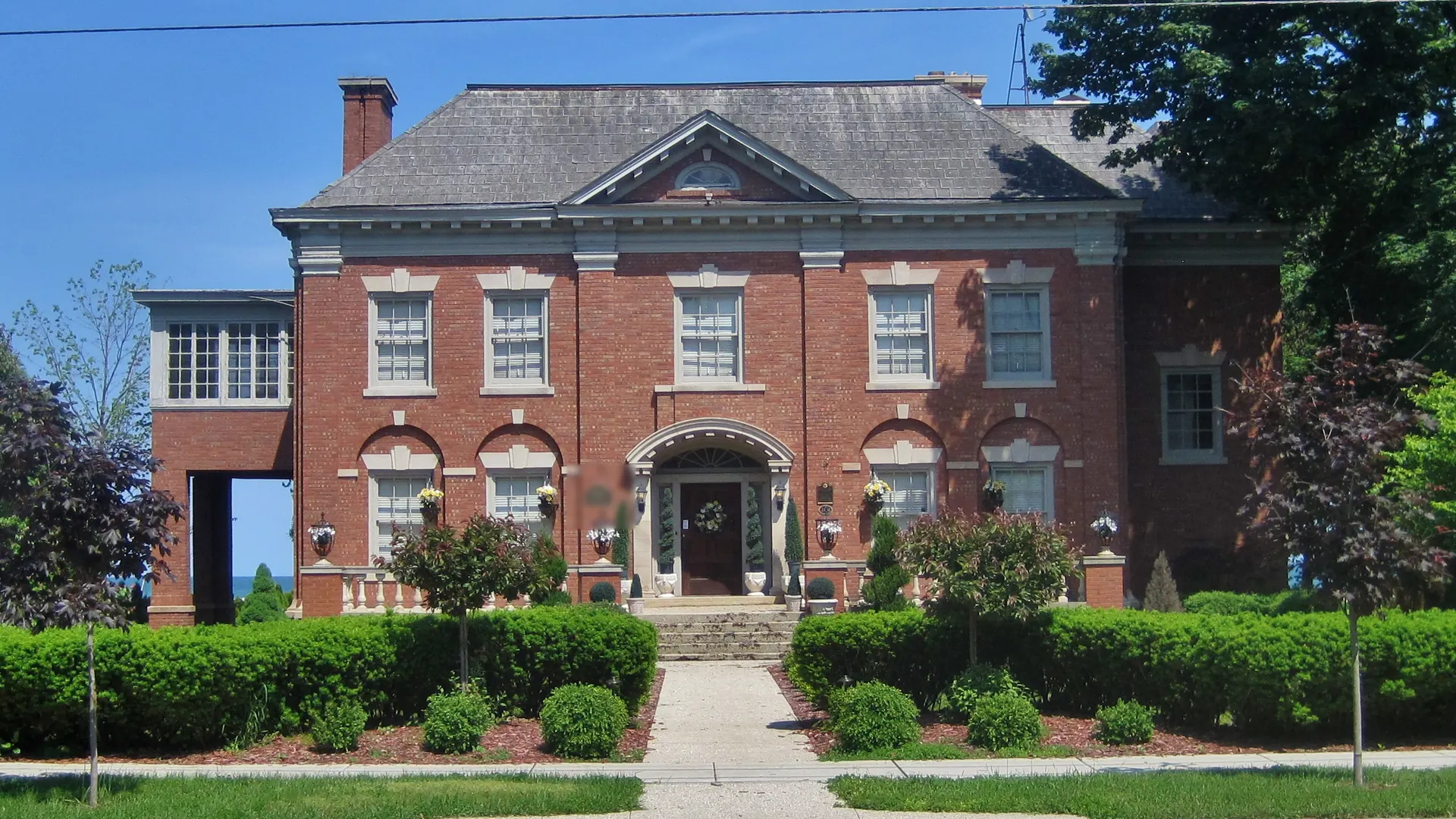
How Much Does Tuckpointing Cost in Wisconsin?
National cost guides put tuckpointing at about $5 to $25 per square foot. Most homeowners spend $400 to $2,500 per job, and guide averages run $1,450 to $2,000. A whole brick house can reach $10,000 to $50,000 or more.
Those are market numbers, not our price list. In Wisconsin, higher mason wages push on the price, and hard winters push on how often you pay it. Use the ranges as a starting point for tuckpointing around Racine, then get a written quote for your wall.
What does tuckpointing cost for walls, chimneys, foundations and steps?
Tuckpointing is the everyday name for repointing: grinding worn mortar out of the joints and packing in new mortar. National cost guides price it by the square foot of wall. Here are their ranges for common jobs.
| Job | National range | Notes |
|---|---|---|
| Wall, first 8 feet up | $5 to $10 per sq ft | Little or no scaffolding |
| Wall above 10 feet | $10 to $25 per sq ft | Ladders or scaffolding |
| Stone wall | $8 to $40 per sq ft | Wide joints can run deep |
| One wall, 8 by 10 feet | $400 to $2,500 | About 80 sq ft |
| Chimney | $500 to $2,500 | Work at roof height |
| Basement walls | $1,600 to $8,000 | Four 8 by 10 foot walls |
| Stone foundation | $3,500 to $6,500 | One guide’s typical range |
| Brick steps | $300 to $750 per step | Repairs, priced per step |
| Whole brick house | $10,000 to $50,000 | About 2,000 sq ft of brick |
The guides behind these numbers were updated between 2022 and 2026. Labor is most of the bill, at 80 to 90 percent in one guide. Small jobs often carry a minimum charge, which one guide puts at $300 to $2,000.
A chimney with a cracked crown or loose brick above the roof needs more than new joints. That is masonry chimney repair, and our post on what chimney repair costs in Wisconsin covers those prices.
How do Wisconsin wages and winters change the math?
Labor is the big number, and Wisconsin masons earn more than the national average. Bureau of Labor Statistics estimates for 2025 put Wisconsin brickmasons and blockmasons at $37.57 an hour on average. The national figure is $32.83, and the Milwaukee metro runs $40.53. With labor that large a share, local wages carry into the price.
Winters set how often the bill comes. NOAA keeps 30-year climate normals for Racine, covering 1991 to 2020. They show the low hitting 32 degrees or colder on about 119 days a year. On about 68 of those days, the high climbs back above freezing.
Water in a worn joint can freeze and thaw again and again. The National Park Service names freeze-thaw damage as a northern-climate concern for mortar.
What drives the price of a tuckpointing job?
These four things move a quote.
Joint depth. A Brick Industry Association technical note says old mortar comes out to at least twice the joint width. That is generally 3/4 inch, or until sound mortar is reached. Loose mortar past that depth comes out too, so deep decay adds hours.
Height and access. Height moves the price fast. Past 10 feet, one guide’s range doubles or more, because the work needs ladders or scaffolding. Another guide notes that a ranch house will likely cost less than a two-story one.
Old, soft brick. New mortar has to be softer than the brick and no harder than the old mortar. That rule comes from the National Park Service. Mortar that is too hard pushes stress into the brick, and the face can spall, meaning it flakes off.
That matters here. About 34 percent of homes in the cities of Racine and Milwaukee were built before 1940. Nationally the share is about 12 percent, per Census Bureau estimates for 2020 to 2024. The Park Service notes that mortar from 1873 to 1930 ranges from lime and sand to lime and cement blends.
On very old brick, the mortar may have to come out by hand. One guide prices hand work at $7 to $25 a square foot, against $5 to $20 with power tools. Matching takes time too. Kenosha’s historic district plans call for new mortar that matches the original color, style, texture and strength.
Spot work or the whole wall. Spot tuckpointing costs less in total but more per foot. The Park Service notes that five one-foot patches cost more than five feet of joint in a row. Once 25 to 50 percent of a wall needs work, it says redoing all of it may pay off. The same goes for a wall that needs scaffolding anyway.
How can you tell if a wall needs tuckpointing?
Mortar falling out between the bricks is the plain sign. A Brick Industry Association technical note lists these signs too:
- Mortar worn back more than 1/4 inch from the face.
- Crumbling mortar, or holes in the joints.
- Hairline cracks in the mortar.
- Cracks between the brick and the mortar.
The same note says light scraping with a metal tool is a common check. A house key works. If the mortar comes out like sand, that joint needs work.
Inside the house, damp walls and damaged plaster can point to the same problem, the National Park Service notes. So can loose bricks outside.
Find the water source first. The Park Service warns that if a leaking roof or gutter keeps feeding the wall, the mortar keeps failing. The tuckpointing then turns into wasted money.
Why does tuckpointing cost less than replacing spalled brick?
Mortar is meant to be the weak link. The National Park Service calls it sacrificial: the joints wear so the brick does not. Open joints let more water into the wall, and moisture trapped in brick can pop its face off.
Replacing brick costs more than new joints. One national guide prices brick replacement at $10 to $30 a square foot, against $5 to $25 for tuckpointing. It puts spalled brick repair at $900 to $20,000 a job. For brick that has already spalled, see how spalled brick gets replaced.
How do you get a real number for your wall?
National ranges get you close. A real number comes from the wall itself: the joint depth, the height, the brick and the old mortar. Whoever you hire, the quote should name the areas and the mortar match.
M.O.E Masonry is based in Mount Pleasant on the south side of Racine. We look at the job, or you send photos, and we put the quote in writing. See how we match mortar to old brick, or call or text (262) 744-4688.