
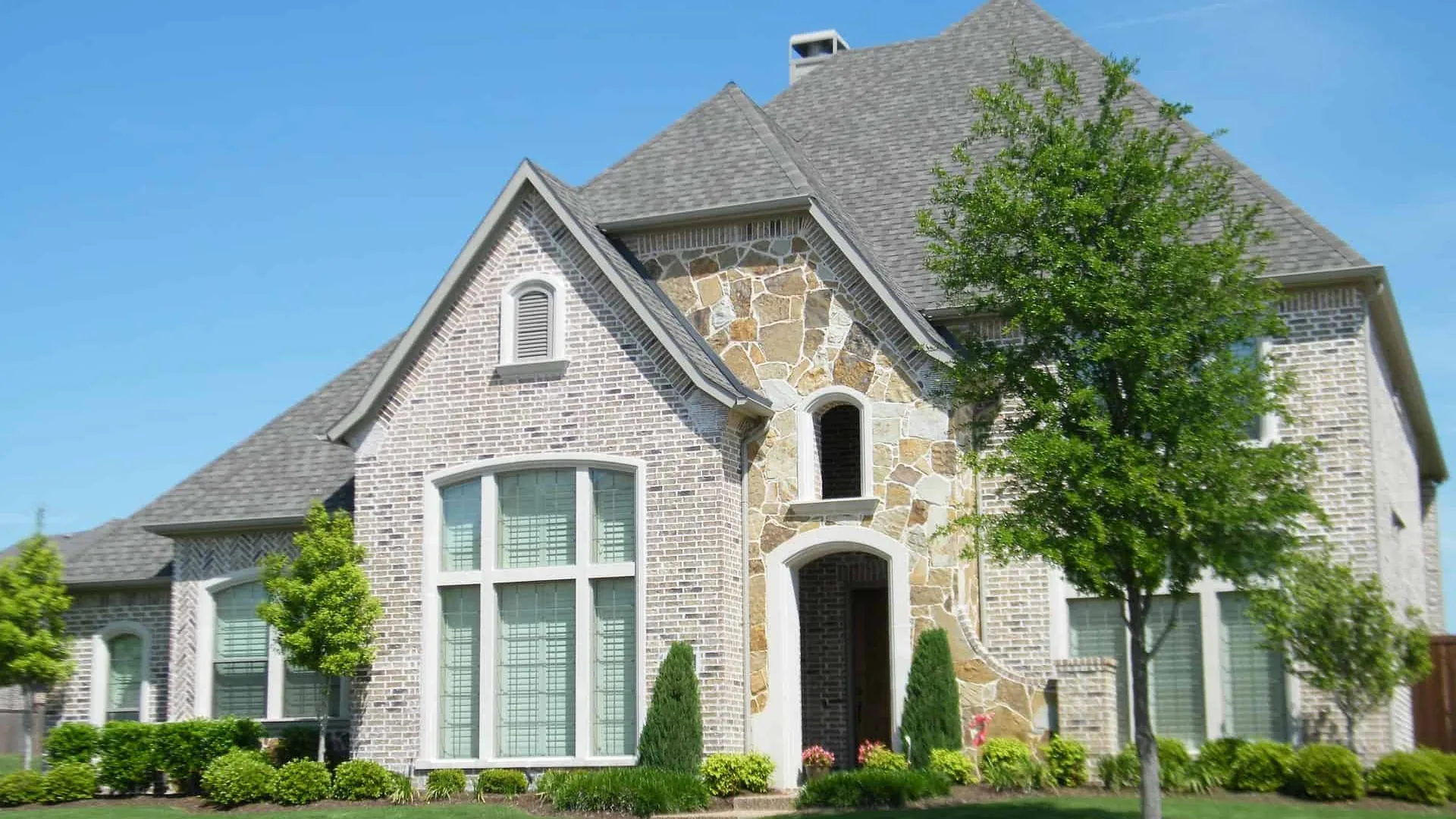
Brick Veneer vs Stone Veneer: Which Fits a Wisconsin House?
Brick veneer and manufactured stone veneer cost about the same to put on a house. National cost guides put brick at about $12 to $25 per square foot installed. Manufactured stone runs about $13 to $22. Natural stone costs more: about $23 to $43 for thin stone, and more again for full-bed stone.
The bigger difference is weight. Brick and full-bed stone are heavy, so they bear on the foundation, usually on a built-in ledge. Thin stone and manufactured stone veneer are light and bond to the wall with mortar. For Wisconsin winters, brick handles freeze-thaw well, and manufactured stone needs to stay clear of de-icing salt.
These are market numbers, not our price list. If you already lean toward stone, see how we lay natural and manufactured stone veneer.
What does each veneer cost per square foot?
Full-bed stone is real stone laid like a stone wall. Thin stone veneer is real stone sawn an inch or two thick. Manufactured stone veneer is tinted cement and lightweight aggregate, cast to look like stone.
These installed ranges cover materials and labor. They come from national cost guides published from 2024 to 2026.
| Veneer | Installed cost per sq ft | Weight and support | How it attaches |
|---|---|---|---|
| Brick veneer | About $12 to $25 | About 40 lb per sq ft, on a foundation ledge | Metal ties and a 1-inch air space |
| Full-bed natural stone | About $39 to $72 in one example | Heaviest of the four, on a foundation ledge | Laid like brick, with ties and an air space |
| Thin natural stone veneer | About $23 to $43 | Pieces capped at 15 lb per sq ft, no ledge | Mortar over lath and a scratch coat |
| Manufactured stone veneer | About $13 to $22 | Pieces capped at 15 lb per sq ft, no ledge | Mortar over lath and a scratch coat |
The full-bed row comes from one national guide, which priced a 250-square-foot solid stone front at $9,800 to $18,000. Height, corners, window cuts and scaffolding move every number here.
How much does each one weigh, and what holds it up?
Brick Industry Association technical notes use about 40 pounds per square foot for one layer of brick. They call for at least two-thirds of the brick’s thickness to rest on the foundation. Wisconsin’s Uniform Dwelling Code lets veneer overhang the foundation wall by 1 inch at most (SPS 321.26).
Full-bed stone is laid the same way, and cost guides call solid stone the heaviest choice. On a new house or an addition, the ledge can be built into a concrete block foundation. The state dwelling code sets footings below frost or at least 48 inches down, whichever is deeper (SPS 321.16).
On an existing house with no ledge, brick or full-bed stone needs a new ledge or a steel angle first. Cost guides list that support as an added cost. The local building inspector’s office can say whether the job needs a permit.
Thin stone and manufactured stone veneer skip the ledge. They are adhered veneer, held to the wall by mortar. The national masonry standard caps each adhered piece at 2 5/8 inches thick and 15 pounds per square foot.
How is each one attached and drained?
Brick veneer is anchored veneer. Metal ties fasten it to the framing, with an air space of at least 1 inch behind it (SPS 321.26). Water that gets through the brick runs down that space. Flashing at the base turns it out through weep holes no more than 2 feet apart.
Full-bed stone follows the same veneer rules in the state dwelling code. We build brick veneer on new houses and additions to these details.
Manufactured stone veneer goes on in layers. On a framed wall, the industry installation guide calls for two layers of water-resistive barrier. Lath goes over that, then a half-inch scratch coat of mortar. Each stone is buttered with mortar and pressed into place.
A weep screed at the base lets water out. The guide holds it at least 4 inches above soil and 2 inches above paving. Thin natural stone goes on the same way.
How do they handle freeze-thaw and road salt?
Freeze-thaw damage comes from water freezing inside wet masonry, over and over. The state dwelling code requires Grade SW brick wherever brick faces weather or frost (SPS 321.26). The S stands for severe weathering.
The Brick Industry Association recommends Grade SW for its high resistance to repeated freezing while soaked. The code also keeps veneer above grade unless flashing sits at grade or within two courses of it.
Natural stone depends on the stone. The Natural Stone Institute has studied how de-icing chemicals break down limestone. Salt crystals grow inside the stone and can damage it at the surface and below.
The manufactured stone installation guide is direct about salt. It says to keep the veneer away from de-icing salt and harsh chemicals, which can discolor or damage it. It also rules out outdoor stair risers that see de-icers and snow shovels.
Cold sets a limit too. The state dwelling code and the stone veneer guide both call for cold-weather protection below 40 degrees F.
What upkeep does each one need?
A Brick Industry Association note estimates 100 to 150 years or more before brick walls need repair. It puts mortar at 50 years or more. Sills, parapets, chimneys and caps take harder weather and may need work sooner. When joints wear, tuckpointing replaces the old mortar.
Full-bed stone lasts a long time too. Cost guides put solid stone at more than 100 years, and its joints get tuckpointed like brick.
Cost guides give manufactured stone veneer about 20 to 75 years. The installation guide says to clean it without acid or a power washer. Repairs can be tricky, because a discontinued color is hard to match.
Which veneer matches the older houses around Racine?
Census estimates show about three in four homes in the cities of Racine and Milwaukee were built before 1970. In Kenosha, about half were. On an older house, match what is already there: brick beside brick, natural stone beside old stone.
Milwaukee’s Cream City brick is a hard match. The Encyclopedia of Milwaukee calls it a soft, golden-yellow brick, last made in the 1920s. A match means salvaged brick or a new brick picked for color. A Brick Industry Association note warns that salvaged brick may be less durable than new.
Historic districts add a step. Kenosha’s district plans say unpainted brick or stone should not be covered, and exterior changes get a review. Milwaukee’s Historic Preservation Commission reviews changes in its districts too. Check with the city before new veneer goes over old masonry.
So which veneer should you choose?
Brick veneer fits an addition to a brick house, and it handles freeze-thaw well. Manufactured stone veneer fits an existing wall with no ledge, kept clear of soil and salt. Natural stone fits a house that already has it, or an owner who wants the real thing.
At M.O.E Masonry we lay brick, block and stone, so a block foundation and its veneer can share one quote. See our stone masonry work around Racine, or call or text (262) 744-4688. We look at the job, or you send photos, and we put the quote in writing.