
How Much Do Concrete Steps Cost in Wisconsin?
One national cost guide puts poured concrete steps at $200 to $500 per step. That is $1,000 to $5,000 for a set of 5 to 10 steps. Precast steps run $100 to $350 per step installed in the same guide, or $500 to $3,500 total. A second guide puts the 2026 national average at $3,500, and most homeowners pay $600 to $5,000.
These are market numbers, not our price list. For concrete steps around Racine, the price turns on the size of the set and what comes out first. The footing under a stoop and a required handrail can add to it too.
What do poured and precast concrete steps cost?
Poured steps are formed and poured in place. Precast steps are made off site and arrive ready to set. Here is what two national cost guides list.
| Concrete steps | One national cost guide | A second national guide |
|---|---|---|
| Poured steps, per step | $200 to $500 | About $600 for solid steps |
| Poured steps, a full set | $1,000 to $5,000 for 5 to 10 steps | $1,800 to $6,000 |
| Precast steps, per step | $100 to $350, installed | About $200 for hollow steps |
| Precast steps, a full set | $500 to $3,500 | $600 to $2,000 |
| Breaking out the old steps | $3 to $8 per sq ft | $200 to $400, or $2 to $6 per sq ft |
Precast steps cost less because they are hollow and easier to assemble, the first guide says. Poured steps cost more but allow a larger range of sizes. The second guide puts precast at about a third of the price of poured concrete.
What adds to the cost of concrete steps?
Breaking out the old steps. A replacement starts with the old concrete broken out and hauled away. The first guide puts concrete removal at $3 to $8 per square foot. The second puts removing old concrete steps at $200 to $400 and says reinforced concrete costs more to remove.
The footing under a stoop or landing. The state dwelling code covers footings for landings and stoops. SPS 321.16 puts them below the frost penetration level or at least 48 inches below adjacent grade, whichever is deeper. The building inspector decides how the rule applies to your house.
How many steps, and how wide. The second guide says the number of steps you need scales your total. It puts 4-foot-wide steps at $200 to $600 per step, and prices rise with width. A bigger landing adds concrete and footing too.
The state stair rules. The state dwelling code also covers exterior stairways attached to or supported by the house. Risers may not exceed 8 inches, and stairways must be at least 36 inches wide. So steps that climb 32 inches need at least 4 risers. How these rules apply to your steps is the building inspector’s call.
A required handrail. The code says a flight with more than 3 risers needs at least one handrail for its full length. That rail is a cost of its own. The second guide puts a standard set of entry steps at $800 to $2,400 for the concrete alone. A decorative handrail brings its total to $1,000 to $3,000.
Access and delivery. Where the steps sit affects access for workers and machines, and that shapes the cost, the second guide says. It puts concrete delivery at $100 to $300, usually charged by the yard.
Season. The masonry season here runs spring through fall, and winter work is scheduled by the weather. A National Ready Mixed Concrete Association guide urges caution about placing exterior concrete in late fall, winter or early spring. The risk is new concrete freezing while it is still saturated.
Why do concrete steps fail in a Wisconsin winter?
The concrete guide defines scaling as local flaking or peeling of the finished surface from freezing and thawing. When wet concrete nears freezing, the water expands as it forms ice. As freeze-thaw cycles add up, the chance of scaling rises.
Deicing chemicals make it worse, the guide says. They keep the surface wetter and add more freeze-thaw cycles. Air-entrained concrete holds millions of small air bubbles that give the expanding water and ice room.
Never use ammonium sulfate, ammonium nitrate or magnesium-based salts as a deicer, the guide warns. It says they destroy concrete surfaces. It calls rock salt and calcium chloride acceptable for concrete.
Should you repair concrete steps or replace them?
Repair fits damage at the surface. The second guide says shallow chips and cracks less than 1/4-inch deep can likely be repaired. That assumes the steps are still level.
The first guide puts concrete step repair at $300 to $800 on average, usually patching cracks or small sections. Patching a crumbling section averages $650 in the second guide. A professional crack seal averages $100 there.
Minor scaling is cosmetic and may not need repair, the concrete guide says. Light to moderate scaling can be repaired, though the patch will not match the original color. Heavy scaling that keeps spreading may not be practical to repair.
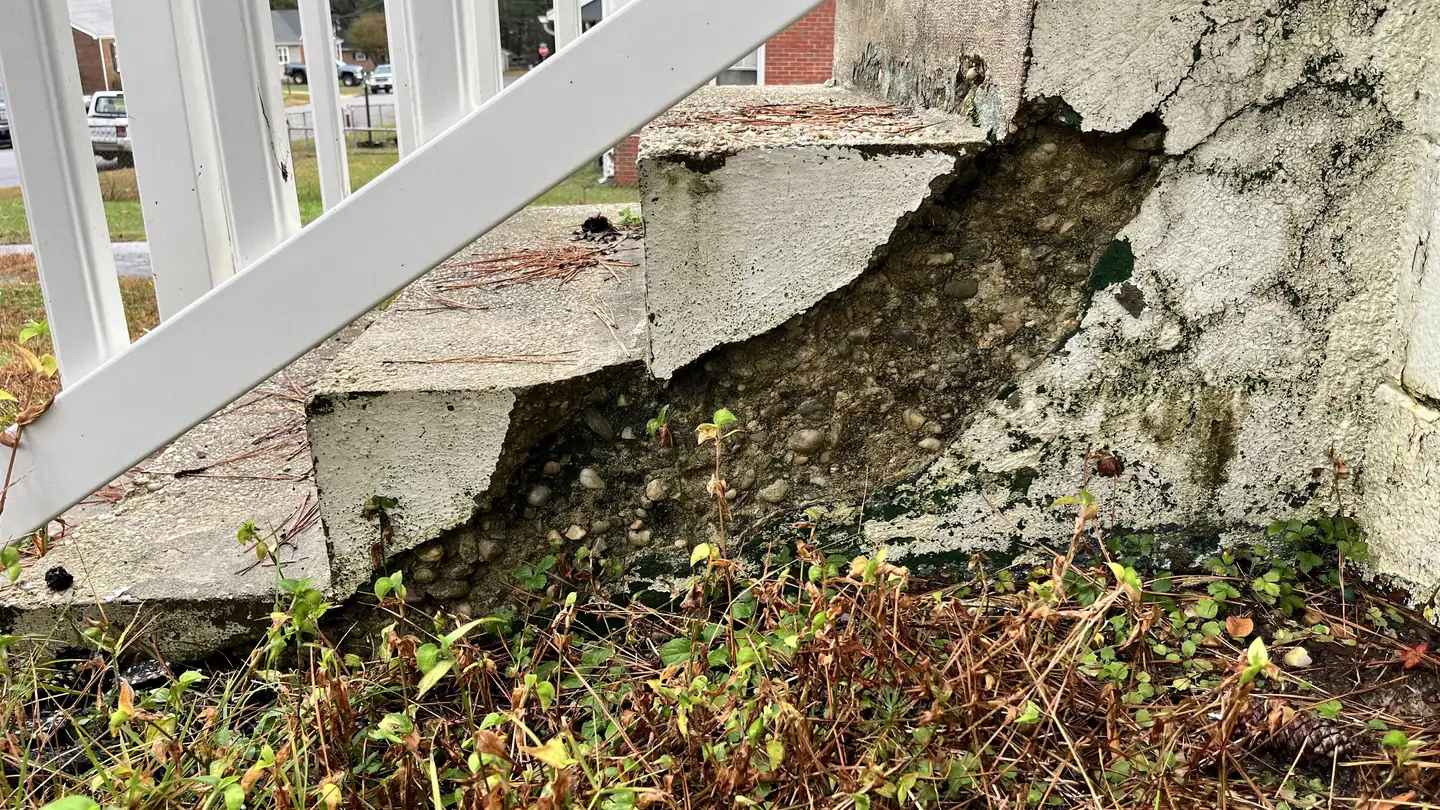
Deeper trouble calls for new steps. The second guide says large, deep cracks that suggest structural damage or sinking mean replacing the steps. It also says repairing instead of replacing, when that works, could save around $2,000.
How long do concrete steps last?
The first guide says concrete steps last 30 to 40 years with proper care. The second guide’s repair page says exterior concrete steps can last 25 to 50 years or more.
In the City of Racine, the median home was built in 1953, per the Census. Steps original to a 1950s house would be about 70 years old by now.
How do you protect new concrete steps the first winter?
The concrete guide’s rules are short. Avoid deicing chemicals in the first winter, and after that use them in moderate amounts. On newly placed concrete, use clean sand for traction instead.
The mix matters before the pour. For exterior concrete exposed to freezing and deicers, the guide says to order 4000 psi concrete. It says the concrete should be air-entrained, at 6 percent total air when the mix uses 3/4-inch or 1-inch stone. Ask what mix a quote is based on.
What do brick or stone steps cost?
The first guide puts stone steps at $1,500 to $9,000 installed. We build stone steps and landings too.
Brick steps that need work fall under masonry repair. Our post on brick repair cost has the market figure per step for brick step repair.
When concrete steps meet a brick or block wall, the job takes both masonry and concrete. We do both in one job.
Do you need a permit for concrete steps in Wisconsin?
It depends on the town. The City of Burlington’s permit FAQ lists handrails and stairs among work that needs a building permit. It says the list is not all-inclusive.
Oak Creek’s building code says a foundation repair that includes porches or stoops must meet the uniform code’s frost depth. Rules vary from town to town. The building inspector’s office in your town answers permit questions, and we point you there.
How do you get a real number for your steps?
National ranges get you close. The real number comes from your own steps and what sits under them.
M.O.E Masonry is a masonry contractor based in Mount Pleasant on the south side of Racine. We pour and repair concrete steps and stoops, along with the concrete work that goes with masonry. We work about 40 miles around Racine, in Racine County, Kenosha County and the south side of Milwaukee County.
We look at the job, or you send photos, and we put the quote in writing. See how we build and repair concrete steps, or call or text (262) 744-4688.